Design|
Simulate| Innovate.
At Simuflux Lab, we are committed to empowering engineers, students, researchers, and industries through professional engineering training and advanced simulation solutions, bridging the gap between theory and practical industrial application.
Industry-Ready Engineering Courses
Computational Fluid Dynamics
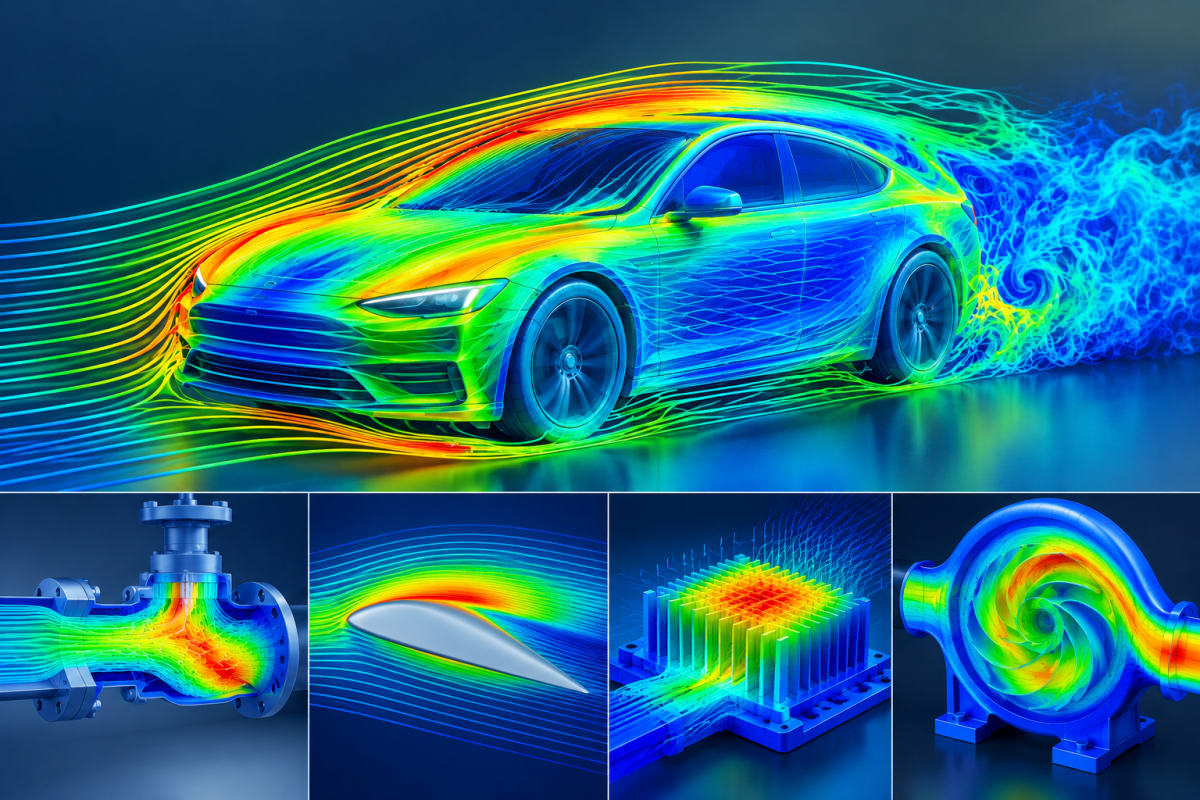
Master Computational Fluid Dynamics (CFD) using ANSYS through a comprehensive, practical, and project-oriented training program designed to develop real-world simulation skills. The course takes you through the complete CFD workflow, starting with geometry preparation and computational domain development, followed by professional meshing techniques, mesh-quality evaluation, and mesh-independence studies. You will learn to set up and analyze laminar and turbulent flows, investigate external aerodynamic flows, and understand the simulation of compressible flows under different operating conditions. The course also introduces coupled fluid-structural simulations, moving-zone simulations, and the fundamentals of reacting-flow analysis, providing exposure to a broad range of engineering CFD applications. Particular emphasis is placed on understanding solver settings, numerical schemes, simulation setup, convergence, and result interpretation, rather than simply learning software commands. You will learn how to evaluate pressure and velocity fields, interpret flow behavior, identify important flow characteristics, and extract meaningful engineering conclusions from simulation results. The training combines live interactive instruction, hands-on practical simulations, assignments, and project-based learning, allowing participants to apply the concepts to engineering problems and develop a structured approach to CFD analysis. The course is suitable for beginners as well as engineering professionals and does not require prior ANSYS experience.
ANSYS Mechanical (Structural, Thermal & Dynamic Analysis)
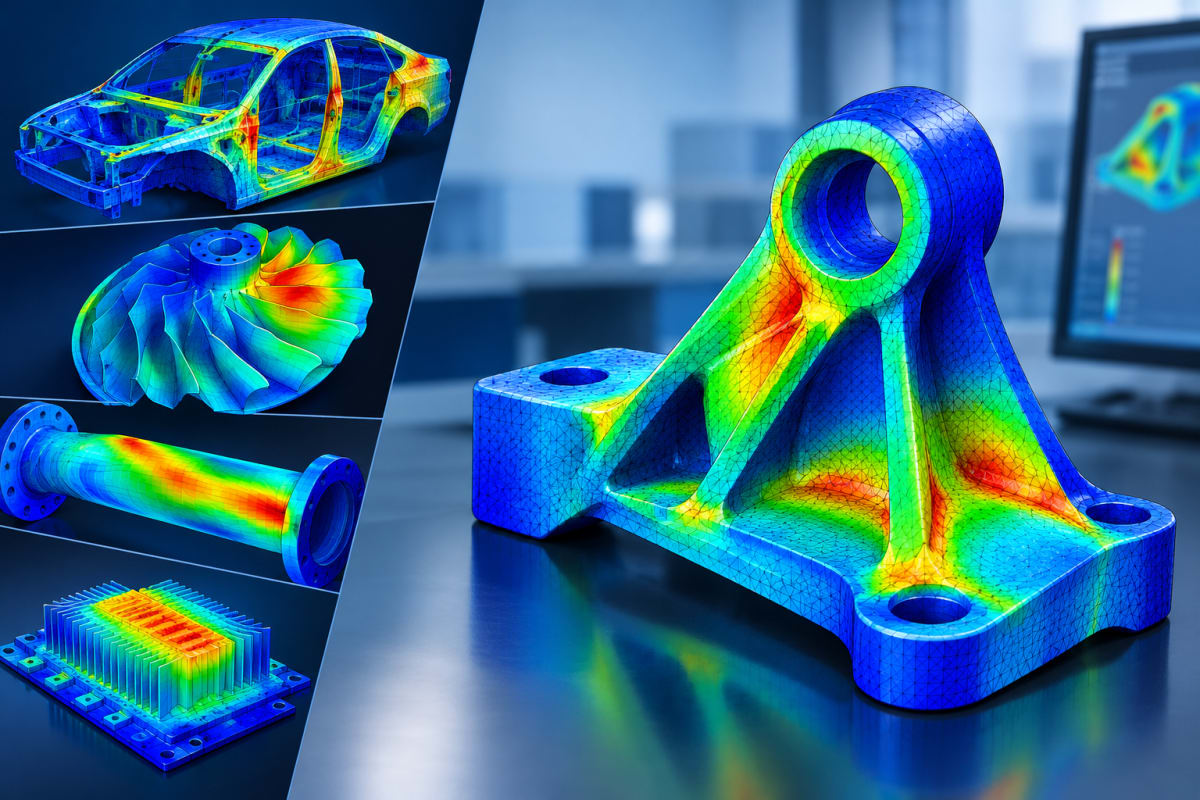
Master ANSYS Mechanical from the fundamentals to practical engineering simulation through a structured, hands-on learning program designed for beginners. This course provides a comprehensive introduction to the ANSYS Mechanical environment and the complete workflow required to perform engineering simulations. Starting with geometry preparation and DesignModeler, participants will learn how to prepare models, generate high-quality meshes, define materials, establish contacts and boundary conditions, apply realistic loading conditions, and set up simulations correctly. The course covers a broad range of mechanical engineering analyses, including Static Structural, Nonlinear Structural, Transient Structural, Explicit Dynamics, Steady-State Thermal, Transient Thermal, Modal, and Harmonic Response Analysis. Particular attention is given to understanding the underlying engineering concepts, selecting appropriate analysis settings, evaluating mesh quality, and interpreting simulation results correctly. Participants will learn how to investigate stress, strain, deformation, temperature distribution, natural frequencies, mode shapes, dynamic response, and other important engineering parameters through practical simulation exercises. The training emphasizes learning by doing, with practical examples, guided exercises, assignments, and project-based learning. By the end of the course, participants will have developed a structured understanding of the ANSYS Mechanical workflow and the confidence to approach engineering simulation problems independently. No prior ANSYS or FEA experience is required. The course is suitable for beginners as well as engineering students and professionals who want to develop practical skills in finite element analysis and mechanical simulation.
Save More When You Learn More
Master ANSYS CFD & Structural Simulations
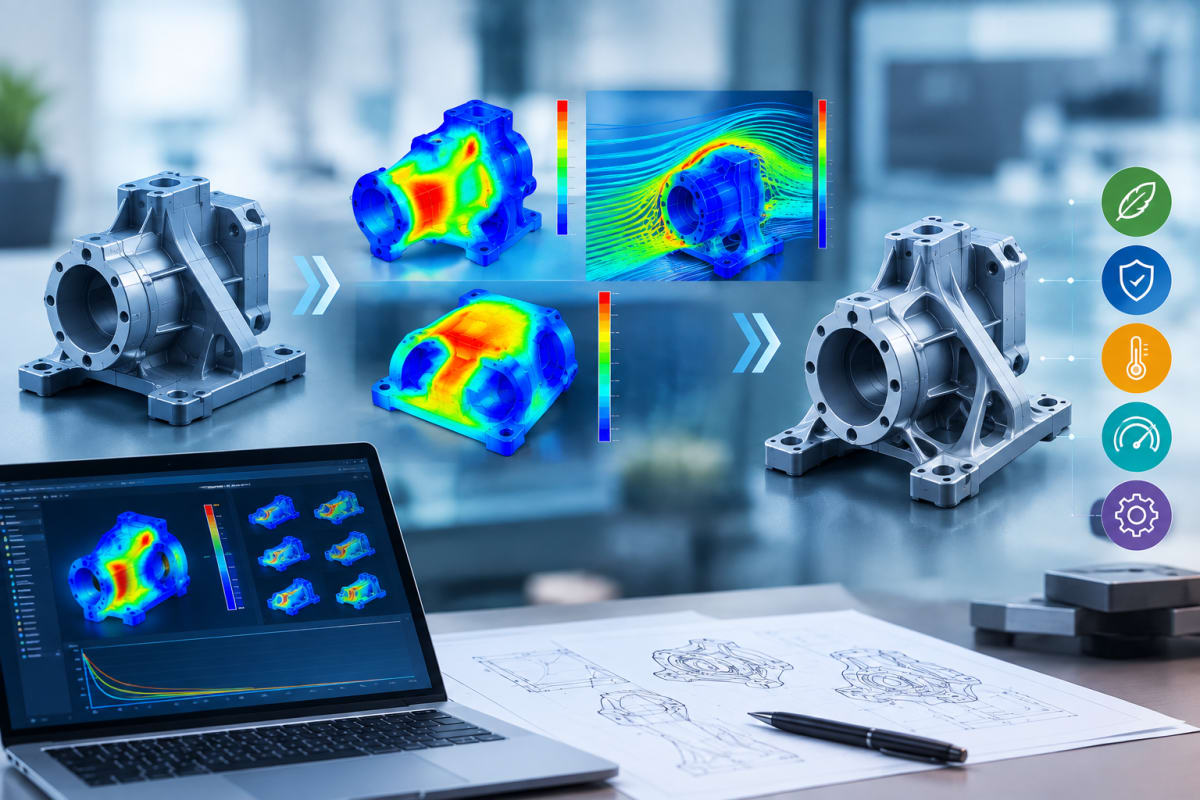
Master ANSYS Computational Fluid Dynamics (CFD) and Structural Analysis through a comprehensive, practical, and project-oriented training program designed to develop real-world engineering simulation skills. This complete ANSYS training package combines Computational Fluid Dynamics and Mechanical/Structural Analysis, providing participants with a broad understanding of numerical simulation for fluid-flow, thermal, structural, dynamic, and multidisciplinary engineering problems. The CFD component covers the complete simulation workflow, beginning with geometry preparation, computational-domain development, professional meshing, mesh-quality assessment, and mesh-independence studies. Participants will learn laminar and turbulent flow modeling, external aerodynamics, compressible-flow simulations, coupled fluid-structural simulations, moving-zone simulations, and the fundamentals of reacting flows. The course also develops an understanding of solver settings, numerical schemes, post-processing, and engineering interpretation of CFD results. The Structural component covers the complete ANSYS Mechanical workflow, including geometry preparation, meshing, material modeling, boundary conditions, contacts, and a range of structural and thermal analyses. Participants will work with Static Structural, Nonlinear Structural, Transient Structural, Explicit Dynamics, Steady-State Thermal, Transient Thermal, Modal, and Harmonic Response Analysis. Throughout the program, emphasis is placed not only on learning software tools but also on understanding the engineering principles behind simulation setup, model selection, boundary conditions, mesh quality, convergence, solver settings, and result interpretation. Participants will learn how to evaluate simulation results and extract meaningful engineering conclusions from CFD and FEA models. The program combines live interactive classes, hands-on practical training, assignments, recorded tutorials, and project-based learning, allowing participants to apply the concepts to engineering problems and develop a structured approach to simulation. The combined training is particularly suitable for mechanical engineers, engineering students, CAE/CFD professionals, R&D engineers, researchers, and beginners who want to build comprehensive ANSYS simulation skills. By completing both disciplines, participants gain exposure to a wider range of engineering simulation applications and develop the foundation required to approach fluid-flow, aerodynamic, thermal, structural, vibration, and dynamic engineering problems using ANSYS